Open Browser - Smart & Safe
- 4.8
- Rating
- 10.00M
- Installs
- Free
- Price

 Analysis by App-foxy
I spent time with Open Browser - Smart & Safe as a straightforward mobile browsing tool, and my first impression was exactly what its name suggests: it tries to keep the experience focused on opening websites without turning the app into a crowded dashboard. It is a free app in the Tools category, made by AdPulse INC, and it runs on Android devices using version 8.0 or later. That makes it accessible to people using older phones as well as newer models.
The important thing to understand is its position. This is not presented as a full productivity suite, a social platform, or a specialized research application. Its store summary describes it as a fast, simple, and secure browser, while the short description is simply “Open Browser.” In daily use, that points toward a basic need: launch a browser, enter a web address or search, and get on with the task. I found that simplicity useful when I wanted less visual noise, although it also means people expecting a feature-heavy replacement for an established browser may find the experience limited.
What Open Browser is really offering
The app has built a sizeable audience for a relatively recent release. It appeared on April 21, 2025, and its current version is 1.6.7. Its average rating is 4.7 from around 147 thousand ratings, with about 1.7 thousand written reviews and over 5 million installs. Those figures do not prove that it will suit every browsing habit, but they do show that the basic concept has attracted substantial use.
You May Also Like

 Blood Strike: 2.5 Anniversary
Blood Strike’s Loadouts Turn Every Drop Into a Tactical Gamble
A close look at Blood Strike’s custom loadouts: how fast access to signature weapons reshapes its battle royale rhythm, rewards preparation, and narrows the gap between fights.

 Pandora - Music & Podcasts
Pandora’s Music Is Easy to Start, but Harder to Recover
Pandora’s strength is its low-effort path from a seed to a station. Its weak spot is how much confidence it asks you to place in connection, setup, and quiet recovery.

 8 Ball Pool
 Is Built on Rivalries, Rematches, and Routine
A close look at the rivalries, rematches, shared routines, and unanswered safety questions that turn a quick pool match into a persistent mobile community.

 Samsung Music
’s Quiet Strength Is Playing What You Already Own
Its reach comes less from spectacle than from dependable access to a personal library. That simplicity is both the app’s strongest retention engine and its ceiling.

 AccuWeather: Weather Radar
AccuWeather Review: A Quick, Clear Forecast for Everyday Decisions
For everyday plans, the best forecast is the one you can understand quickly. AccuWeather makes rain timing, radar, and local conditions easy to act on, with a few trade-offs.

 Hill Climb Racing
Why Hill Climb Racing Still Turns Crashes Into One More Run
A tiny car, a bumpy hill and one more upgrade: Hill Climb Racing keeps resurfacing because its simple chaos makes every near-miss feel personal.
More From Our News Desk



For me, the strongest part of the experience is the low barrier to entry. I do not need to learn a complicated layout before opening a page. That matters on a spare phone, a family device, or a handset used mainly for quick searches, account pages, delivery tracking, ticket information, and links received in messages. The app feels aimed at those short sessions rather than at users who want to build an elaborate personal browsing system.
Because it is free, the initial decision is uncomplicated: there is no purchase to weigh against the feature set. That gives it a clear advantage over paid browser tools when all I need is a basic way to access the web. At the same time, free access should not be confused with unlimited value. The real question is whether its simple approach covers the tasks I perform every day, and whether I am willing to give up advanced controls that may be available elsewhere.
How the free model affects the decision
I appreciate that I can try it without committing money first. That makes it easy to install on an older compatible Android phone and judge the interface personally. A free browser is also useful as a backup: if my usual browser becomes cluttered, behaves oddly on a particular page, or is unavailable on a secondary device, having a separate option can be practical.
Still, I would not choose it solely because it costs nothing. A browser is something I use frequently, so small details can matter more than the price. If I need extensive tab organization, mature synchronization, specialist privacy controls, or a deep extension ecosystem, a familiar alternative may provide more value even when the free price is the same. Open Browser’s advantage is not that it makes every browsing task better; it is that it keeps the entry point simple.
There is also a useful distinction between free access and paid value here. Since the app is free, the decision is not about whether a subscription or one-time purchase is worthwhile. It is about whether the time saved by a clean, uncomplicated tool outweighs the features I might miss. For casual browsing, that can be an easy yes. For demanding daily research or work, I would test it beside my main browser rather than replacing everything immediately.
A realistic everyday workflow
Imagine receiving a message with a link to a store collection point while walking through town. I would open the link in this app, check the address, perhaps search for nearby transport, and close it once the task was finished. That is the kind of short, focused session where its simple identity makes sense. I am not building a research archive or managing dozens of open pages; I am solving one small problem quickly.
Another useful situation is a shared or secondary device. A household tablet may be used for checking opening hours, reading a recipe, looking up a manual, or accessing a temporary web form. A browser that does not demand a large setup process can be more approachable for that role. I would still be careful with sensitive accounts on any shared device and would review the app’s own prompts and settings before using it for private activity.
One practical tip is to treat it as a task browser rather than automatically assuming it should become the browser for everything. I would use it for quick searches, one-off links, and lightweight web access first. After a few days, I would note whether I actually miss saved workflows, synchronized information, or advanced tab handling. That test gives a more honest answer than judging it from the name alone.
Where the simple approach helps
The absence of a complicated learning curve is valuable for people who want a browser to stay in the background. When I open a tool like this, I want the page to be the focus, not a long list of controls competing for attention. This can also help users who are less comfortable with technology: the fewer decisions presented at the start, the easier it is to understand what to do next.
Its compatibility with Android 8.0 or later broadens its practical usefulness. Owners of older phones are not automatically pushed toward a newer device just to try it. That does not guarantee identical performance across every handset, because hardware and websites vary, but the operating-system requirement is approachable.
The rating of 4.7 suggests that many users are satisfied with the overall proposition. I would interpret that as encouragement to try it, not as a promise that every page or workflow will feel perfect. Ratings often reflect different expectations: someone who only opens a few links a day may be delighted, while someone who spends hours researching may judge the same app more critically.
The trade-offs I noticed
The main trade-off is breadth versus simplicity. A focused browser can feel pleasant when I only need a page, but a more established alternative may be better when browsing becomes a long-running project. Research sessions often involve multiple tabs, copying information between pages, returning to earlier results, and keeping a consistent setup across devices. If those habits define your day, you should not assume that a minimal browser will replace every tool you already use.
I also would not treat the word “secure” in the store summary as a reason to stop thinking about browsing safety. A secure browsing experience depends on my own choices as well: I still need to recognize suspicious links, avoid entering credentials on unexpected pages, keep the device updated, and be cautious on shared networks. The app’s positioning is reassuring, but it is not a substitute for sensible online behavior.
Another limitation is the lack of a clear reason for power users to switch from their current browser. People who already rely on established synchronization, password workflows, reading tools, or extensions may find that moving creates more friction than benefit. Even if Open Browser handles ordinary pages well, changing a browser affects habits, saved access, and the way I move between phone and other devices.
That is why I see it as a complement before I see it as a universal replacement. It can be the right answer for a clean, uncomplicated browsing role, especially on a secondary Android device. It is less convincing for someone whose browser is also a research workspace, identity manager, reading queue, and cross-device archive.
Small habits that make testing more useful
If you install it, begin with the pages you genuinely use rather than only visiting a few simple sites. Try a search, a page with several images, a sign-in page you trust, a form, and a link opened from another app. This reveals whether the basic flow suits your routine. I would also test how comfortable it feels to return to a page after switching away, because that is where a simple browser can either remain convenient or start to feel restrictive.
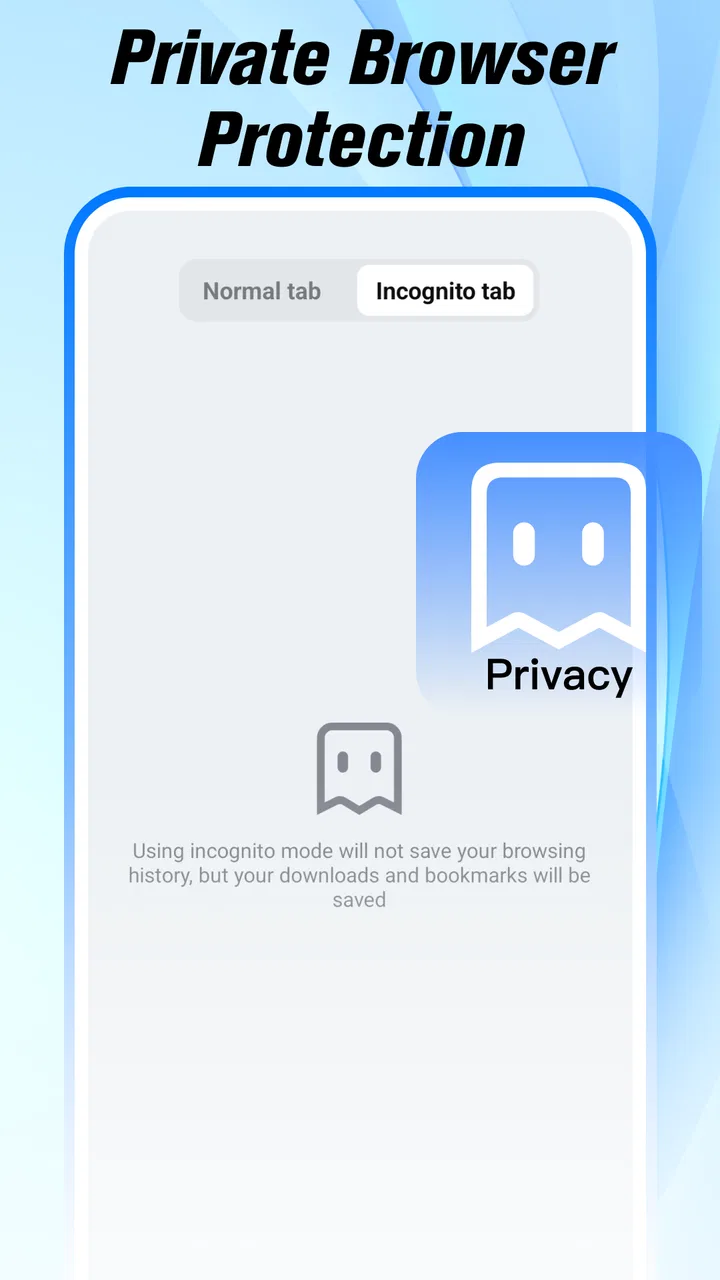
For privacy-conscious browsing, I would separate low-risk exploration from important account activity until I understand the app’s behavior and settings. Use it first for public information, maps, menus, manuals, and temporary links. Then decide whether it deserves a larger role. This staged approach is especially sensible because the app’s strongest verified promise is its accessible, simple positioning, not a detailed list of specialist controls.
A second tip is to compare effort rather than just page loading. Open the same everyday task in your usual browser and in this one: searching for a product manual, checking a booking page, or finding a local service. Notice which app gets you from question to answer with fewer distractions. The winner may differ by task, and that is perfectly acceptable. A browser can earn its place without becoming the only browser on the phone.
Who is most likely to get value
I think the app is a strong candidate for casual users, older Android devices, temporary browsing, and anyone who prefers a small set of obvious actions. It can also suit people who want a second browser for links that do not need to become part of their main browsing history or workflow. Families setting up a basic device may appreciate the approachable starting point, provided they remain attentive to account security and the websites being visited.
It is also worth considering for users who feel overwhelmed by feature-heavy browsers. More tools are not always better. If I spend more time sorting tabs, adjusting options, or navigating a busy start screen than actually reading pages, a simpler alternative can improve the experience even without adding advanced capabilities.
I would be more cautious about recommending it as the primary browser for developers, researchers, students managing many sources, frequent travelers who depend on synchronized access, or anyone whose work depends on specialized browser features. Those users should compare their essential workflow carefully. If losing a particular tool would interrupt the day, the free installation is not enough reason to switch.
My final buy-or-skip verdict
My verdict is a qualified recommendation. Open Browser - Smart & Safe delivers clear value because it is free, easy to try, compatible with Android 8.0 and later, and focused on the basic act of opening and using websites. Its strong audience response and over 5 million installs make it a credible option rather than an app I would dismiss immediately.
I would choose it when I want a lightweight browser for quick searches, temporary links, an older phone, or a secondary device. I would skip it as a full replacement if my browsing depends on advanced organization, deep synchronization, or a mature ecosystem of additional tools. In those cases, the usual established browser may save more time overall.
The best way to decide is to install it beside your current browser and test three real tasks: a quick search, a link from a message, and a longer session with several pages. If the simple layout gets you through those tasks comfortably, the free price makes the experiment easy. If you immediately reach for features that are missing from your routine, keep your existing browser and use this one only where its focused approach genuinely helps.
In short, I see this as a practical tool for people who value direct access over a long feature list. It does not need to replace every browser to be useful. Its value comes from being an uncomplicated option that can handle everyday web access without asking for a financial commitment, while its limits become clear when browsing turns into a complex, multi-step workspace.
FAQs for Open Browser - Smart & Safe
01What makes Open Browser stand out from other mobile browsers?
Open Browser is designed with a focus on speed, security, and user-friendly navigation. It offers a lightweight design that ensures quick loading times and efficient browsing. With advanced privacy features such as ad blockers and tracking protection, it keeps your data secure while enhancing your overall browsing experience.
02Does Open Browser support extensions and add-ons?
Yes, Open Browser supports a variety of extensions and add-ons to enhance functionality. Users can customize their browsing experience by adding tools for productivity, security, and convenience. The browser's extension library is continually updated to provide the most useful and relevant options for users.
03How does Open Browser ensure user privacy and data protection?
Open Browser prioritizes user privacy with built-in features like private browsing modes, ad blockers, and anti-tracking tools. These features prevent websites from collecting personal data without consent, ensuring a safer online experience. Additionally, the browser regularly updates its security protocols to protect against emerging threats.
04Is Open Browser compatible with both Android and iOS devices?
Yes, Open Browser is available for both Android and iOS platforms. It is optimized to perform efficiently on a wide range of devices, ensuring that users can enjoy a seamless browsing experience regardless of their chosen operating system. Regular updates are provided to enhance compatibility and performance.
05What features does Open Browser offer for enhanced user experience?
Open Browser includes features like customizable themes, night mode, and tab management tools to enhance usability. It also supports voice search and offers a streamlined interface for easy navigation. These features are designed to make browsing more intuitive and enjoyable for users, catering to both casual and advanced users.
Pros
- Fast browsing with minimal lag.
- User-friendly interface design.
- Advanced privacy settings included.
- Supports multiple tabs efficiently.
- Customizable home screen options.
Cons
- Limited extensions compared to competitors.
- Occasional ad pop-ups.
- No built-in VPN feature.
- Some features require premium upgrade.
- Sync issues on older devices.

Open Browser - Smart & Safe
Gallery